In the nonwoven fabric industry, ES fiber and ET fiber are two core raw materials for hot air nonwovens, widely used in hygiene products, medical supplies, industrial filtration, automotive interiors, and building materials. However, many buyers and engineers confuse these two fibers—especially since "ET fiber" is not an independent fiber type but a common abbreviation in the industry. This guide clarifies their definitions, performance differences, production processes, and application scenarios, helping you make informed choices for engineering projects, export orders, and product development.
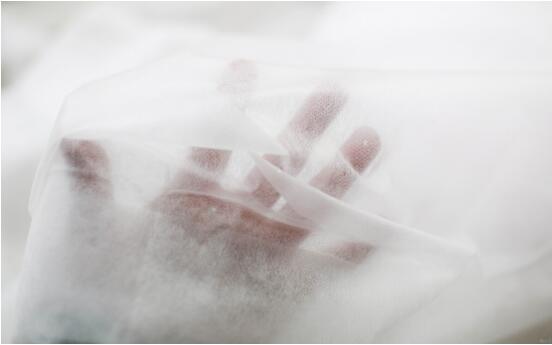
1. What Are ES Fiber and ET Fiber? (Key Definitions for Global Buyers)
1.1 ES Fiber: The Standard Hot-Melt Bonding Fiber
ES fiber, short for Ethylene-Propylene Side By Side fiber (a patent of Chisso Corporation, Japan), is a bicomponent fiber with a core-sheath structure. This structure is the key to its hot-melt bonding performance:
Sheath Layer: Low-melting-point Polyethylene (PE), with a melting point of approximately 130℃. When heated by hot air, the sheath melts to form point-like bonds between fibers.
Core Layer: High-melting-point Polypropylene (PP, melting point ~165℃) or Polyester (PET, melting point ~255–260℃). The core remains stable during the hot air bonding process, maintaining the nonwoven’s shape, toughness, and mechanical strength.
A key advantage of ES fiber is that it requires no chemical adhesives—bonding is achieved through the melting of the sheath layer. This makes hot air nonwovens made from ES fiber safer, more environmentally friendly, and more breathable, which is critical for hygiene and medical applications.
1.2 ET Fiber: A Common Abbreviation for PE/PET ES Fiber
Contrary to popular misunderstanding, "ET fiber" is not a separate fiber category. It is an industry shorthand for PE/PET-type ES fiber, named after its two main components: E (Polyethylene, sheath) and T (Polyester, core).
Important Note: ET fiber must be distinguished from ETFE (Ethylene-Tetrafluoroethylene copolymer), a high-performance industrial fiber used in aerospace and corrosion-resistant applications. ETFE is not used in conventional hot air nonwovens, so it is crucial to clarify this with overseas customers to avoid order errors.
2. Key Performance Comparison: ES Fiber (PE/PP) vs ET Fiber (PE/PET)
The core difference between ES fiber (PE/PP type) and ET fiber (PE/PET type) lies in the core layer material, which directly affects heat resistance, stiffness, strength, and cost. The following comparison table is essential for project selection and export negotiations:
| Performance Indicator | ES Fiber (PE/PP Core) | ET Fiber (PE/PET Core) | Selection Advice for Exporters |
| Melting Point Difference (Sheath vs Core) | Approx. 35℃ | Approx. 125–130℃ | A larger melting point difference widens the hot air bonding process window, reducing defective rates. |
| Heat Resistance | Continuous use ≤ 120℃ | Continuous use ≤ 180℃ | Choose PET core (ET fiber) for high-temperature scenarios (e.g., automotive interiors, baking mats). |
| Hand Feel & Loftiness | Softer and more lofty | Stiffer with better resilience | PP core (ES fiber) for hygiene products; PET core (ET fiber) for medical/industrial filtration. |
| Mechanical Strength | Medium strength, prone to deformation | High strength, dimensionally stable | PET core (ET fiber) for load-bearing or tear-resistant applications (e.g., shopping bags, filter bags). |
| Cost | Low (general-purpose) | Medium-high (high-performance) | PP core for bulk civil orders; PET core for high-end engineering or medical orders. |
| Typical Specifications | 1.5–3.0D × 38–51mm | 0.8–6.0D × 38–51mm (fine denier) | Fine denier (≤1.0D) for skin-friendliness; coarse denier (≥2.0D) for elasticity. |
| Core Application | Diaper topsheet/backsheet, sanitary napkins, mask inner liner, thermal insulation filling, disposable wipes | Medical gowns, surgical drapes, air filter bags, automotive interior trims, HPL fire panel base cloth, industrial wipes | Civil Hygiene Products: ES fiber (PE/PP core) – soft, breathable, and cost-effective. Medical/Industrial/High-Temperature Scenarios: ET fiber (PE/PET core) – high strength, heat resistance, and dimensional stability. |
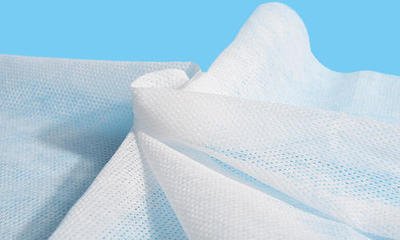
3. Hot Air Nonwoven Production Process & Fiber Ratio
Both ES and ET fibers are processed into hot air nonwovens through the same core process, which is important for explaining production capabilities to overseas customers:
Opening & Mixing: Fibers are opened into individual filaments and mixed evenly (pure ES/ET fiber or mixed with ordinary PP/PET fiber).
Carding: Mixed fibers are carded into a uniform web.
Hot Air Bonding: Hot air (135–150℃) penetrates the web, melting the PE sheath of ES/ET fibers to form point-like bonds.
Cooling & Winding: The bonded web is cooled to set its shape and then wound into rolls.
Fiber ratio recommendations for different scenarios:
Pure ES/ET Fiber: Best loftiness and softness, suitable for high-end hygiene products (e.g., diaper topsheets, mask inner liners).
Mixed Ratio: 60%–90% ES/ET fiber + 10%–40% ordinary PP/PET fiber. This balances strength and cost, ideal for industrial and general-purpose nonwovens.
Common basis weight range: 10–120 g/m² (15–30 g/m² for hygiene products; 40–80 g/m² for filtration materials).
4. Common Mistakes to Avoid in Export Purchasing
When dealing with overseas customers (especially from Europe, America, and Southeast Asia), avoid these common pitfalls to ensure smooth order execution:
Confusing "ET Fiber" with ETFE: Clearly inform customers that "ET fiber" refers to PE/PET-type ES fiber, not ETFE. Provide sample specifications and test reports to avoid misunderstandings.
Ignoring Report Matching: For exports, provide third-party test reports for bicomponent fibers (melting point, core-sheath structure) that match the delivered product’s model, thickness, and fiber type. Mismatched reports will lead to customs clearance or acceptance failures.
Blindly Pursuing Fine Denier: Fine denier fibers (≤0.8D) improve skin-friendliness but increase cost and reduce strength. Recommend 0.6D for baby products and 1.5D for adult hygiene products to balance performance and cost.
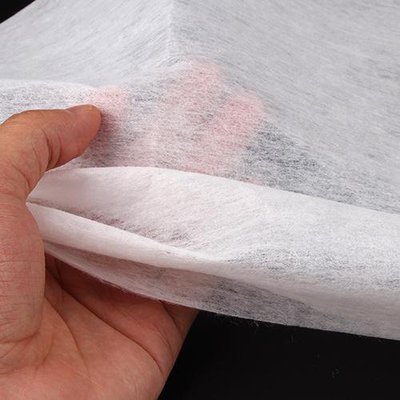
5. Conclusion: How to Choose Between ES and ET Fiber?
The choice between ES fiber (PE/PP core) and ET fiber (PE/PET core) depends on your application scenario, performance requirements, and budget. Use this simple formula for quick selection:
Civil Hygiene Products: ES fiber (PE/PP core) – soft, breathable, and cost-effective.
Medical/Industrial/High-Temperature Scenarios: ET fiber (PE/PET core) – high strength, heat resistance, and dimensional stability.
Export Marketing Tip: Highlight "core-sheath structure", "point-like hot-melt bonding", and "no chemical adhesives" in your product descriptions. Clearly label the core material (PP/PET) and melting point to enhance customer trust.
By understanding these key points, you can select the right fiber for your project, communicate effectively with overseas customers, and improve your product’s visibility in Google searches.

 English
 العربية
 Français
 Русский
 Español
 Português
 Deutsch
 italiano
 日本語
日本語 한국어
한국어 Nederlands
 Tiếng Việt
 ไทย
ไทย Polski
 Türkçe
 አማርኛ
አማርኛ Bahasa Melayu
 தமிழ்
தமிழ் Filipino
 Bahasa Indonesia
 magyar
 Română
 Монгол
 қазақ
қазақ Српски
 हिन्दी
 فارسی
فارسی Kiswahili
 Slovenčina
 Slovenščina
 Svenska
 українська
 Ελληνικά
 Suomi
Suomi Հայերեն
 עברית
עברית اردو
اردو Shqip
Shqip বাংলা
বাংলা Hrvatski
 Afrikaans
 Māori
Māori සිංහල
සිංහල Oʻzbekcha
 latviešu
 Беларуская мова
 Bosanski
 Български
 ქართული
 Lietuvių
 Malti
Malti


