You are here:Home / Blog / The Difference Between Homogeneous Vinyl Flooring and Heterogeneous Vinyl Flooring
The Difference Between Homogeneous Vinyl Flooring and Heterogeneous Vinyl Flooring
Views: 0 Author: Site Editor Publish Time: 2025-01-16 Origin: Site
When choosing vinyl flooring for your space, understanding the distinction between homogeneous vinyl flooring and heterogeneous vinyl flooring is essential. Each type has its own unique structure, characteristics, and applications. In this comprehensive guide, we will dive deep into the differences between these two popular flooring types to help you make an informed decision.
What is Homogeneous Vinyl Flooring?
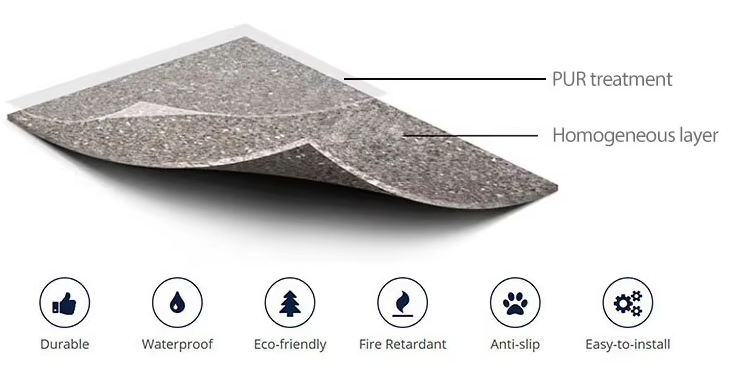
Homogeneous vinyl flooring, as the name suggests, is made from a single layer of material that extends uniformly from the surface to the bottom. This type of flooring is often preferred for its durability and uniform appearance.
Key Features of Homogeneous Vinyl Flooring
Structure: Composed of a single, consistent material throughout.
Thickness: Uniform thickness without a distinct wear layer.
Pattern: The color and pattern penetrate the entire flooring material, ensuring a consistent look even if the surface wears down.
Durability: Resistant to wear and tear due to its solid composition.
High Temperature Resistance: Contains stone powder, which enhances its ability to withstand high temperatures.
Ease of Welding: The flat and uniform composition allows for straightforward welding treatment, making it a preferred choice for seamless flooring installations.
Applications of Homogeneous Vinyl Flooring
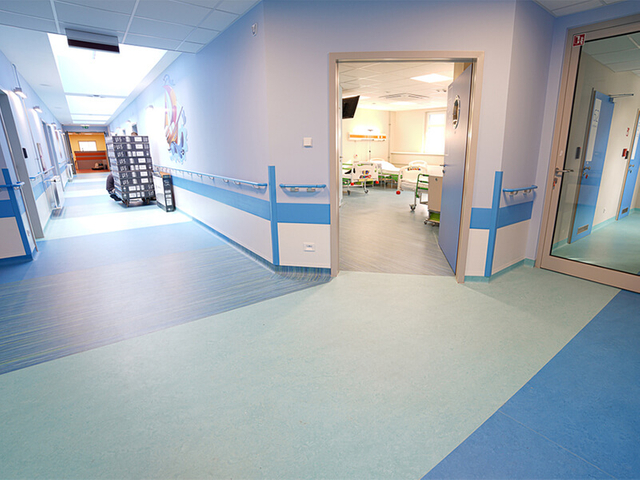
Homogeneous vinyl flooring is widely used in high-traffic areas such as hospitals, schools, and industrial settings. Its ability to maintain a consistent appearance despite heavy use makes it ideal for environments requiring cleanliness and durability.
What is Heterogeneous Vinyl Flooring?
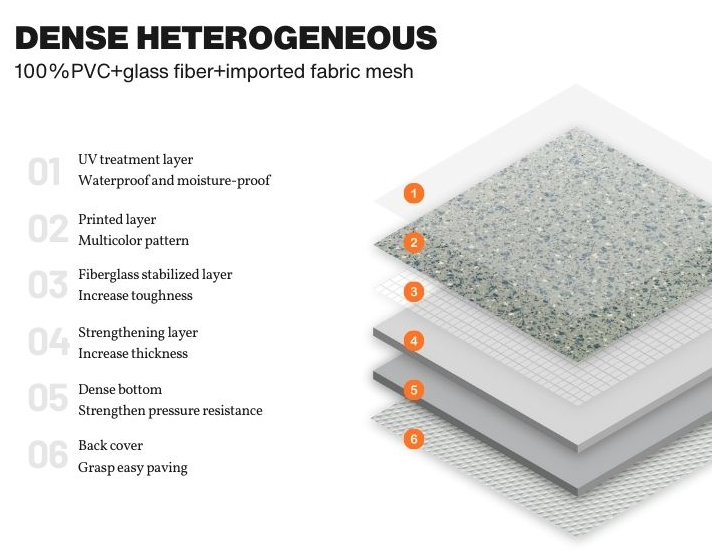
Heterogeneous vinyl flooring, often referred to as multi-layer composite PVC flooring, is composed of multiple layers, each serving a specific purpose. This type of flooring offers greater design flexibility and customization options.
Key Features of Heterogeneous Vinyl Flooring
Structure: Multi-layer construction typically includes:
Wear-resistant layer: Protects against scratches and wear.
Printing layer: Offers a wide variety of patterns and designs.
Foam backing layer (optional): Enhances comfort underfoot and sound absorption.
Thickness: Available in various thicknesses for the wear-resistant layer, such as 0.12mm, 0.2mm, 0.3mm, 0.5mm, and 0.7mm. A thicker wear layer increases durability.
Pattern Variety: The surface printing layer allows for endless design possibilities, including wood, stone, and abstract patterns.
Comfort and Soundproofing: Foam-backed versions offer better cushioning and sound insulation.
Welding Challenges: The foam bottom can make welding lines more difficult to control, requiring precision during installation.
High Temperature Resistance: Relatively lower than homogeneous flooring due to the multi-layer composition.
Applications of Heterogeneous Vinyl Flooring
Heterogeneous vinyl flooring is ideal for residential, commercial, and hospitality spaces where aesthetic appeal and comfort are priorities. Its diverse design options make it suitable for creating visually striking interiors.
Comparison Between Homogeneous and Heterogeneous Vinyl Flooring
Feature
Homogeneous Vinyl Flooring
Heterogeneous Vinyl Flooring
Structure
Single-layer, consistent material
Multi-layer, includes wear-resistant and printing layers
Thickness
Uniform, no distinct wear layer
Variable wear layer thicknesses available
Pattern
Runs through the entire material
Surface printing layer with a wide pattern variety
Durability
High due to consistent material
Depends on the wear layer thickness
Welding Treatment
Easy to handle
Foam bottom makes welding more challenging
High Temperature Resistance
Excellent due to stone powder content
Moderate, affected by multi-layer composition
How to Choose the Right Flooring?
Consider Your Application
For high-traffic areas like hospitals or schools, opt for homogeneous vinyl flooring due to its durability and ease of maintenance.
For residential or commercial spaces seeking aesthetic versatility, heterogeneous vinyl flooring provides more design options.
Evaluate Durability Needs
If wear resistance is a top priority, consider the thickness of the wear-resistant layer in heterogeneous vinyl flooring.
For long-term use in industrial settings, homogeneous flooring is a robust choice.
Think About Comfort and Acoustics
For spaces where comfort underfoot and noise reduction are important, foam-backed heterogeneous flooring is an excellent option.
Budget Considerations
Homogeneous flooring is typically more cost-effective for large-scale installations.
Heterogeneous flooring may cost more but offers greater customization and comfort.
Installation and Maintenance Tips
Homogeneous Vinyl Flooring
Ensure the subfloor is clean and level before installation.
Use professional-grade adhesives for a secure fit.
Regular cleaning with neutral pH cleaners helps maintain its appearance.
Heterogeneous Vinyl Flooring
Pay attention to the alignment of the printed layer during installation.
Foam-backed versions require precise handling to avoid uneven surfaces.
Use furniture pads to prevent dents and scratches.
Conclusion
Both homogeneous and heterogeneous vinyl flooring have their unique strengths and applications. By understanding their differences and evaluating your specific needs, you can choose the perfect flooring solution for your space. Homogeneous flooring excels in durability and high-traffic areas, while heterogeneous flooring offers unmatched design versatility and comfort.
Greatpoly is a family-owned company with a long history. It has been deeply involved in the building materials industry for many years and is well-known for its excellent quality and innovative design.

 English
 العربية
 Français
 Русский
 Español
 Português
 Deutsch
 italiano
 日本語
日本語 한국어
한국어 Nederlands
 Tiếng Việt
 ไทย
ไทย Polski
 Türkçe
 አማርኛ
አማርኛ Bahasa Melayu
 தமிழ்
தமிழ் Filipino
 Bahasa Indonesia
 magyar
 Română
 Монгол
 қазақ
қазақ Српски
 हिन्दी
 فارسی
فارسی Kiswahili
 Slovenčina
 Slovenščina
 Svenska
 українська
 Ελληνικά
 Suomi
Suomi Հայերեն
 עברית
עברית اردو
اردو Shqip
Shqip বাংলা
বাংলা Hrvatski
 Afrikaans
 Māori
Māori සිංහල
සිංහල Oʻzbekcha
 latviešu
 Беларуская мова
 Bosanski
 Български
 ქართული
 Lietuvių
 Malti
Malti