PVC flooring is widely used in homes, shopping malls, hospitals, and other scenarios due to its advantages of wear resistance and easy maintenance. Its formaldehyde emission, antibacterial ability, and surface UV coating quality are directly related to usage safety and service life. This article compiles a set of simple and feasible testing methods that require no professional equipment, allowing ordinary people to operate and help you quickly judge the core properties of PVC flooring.
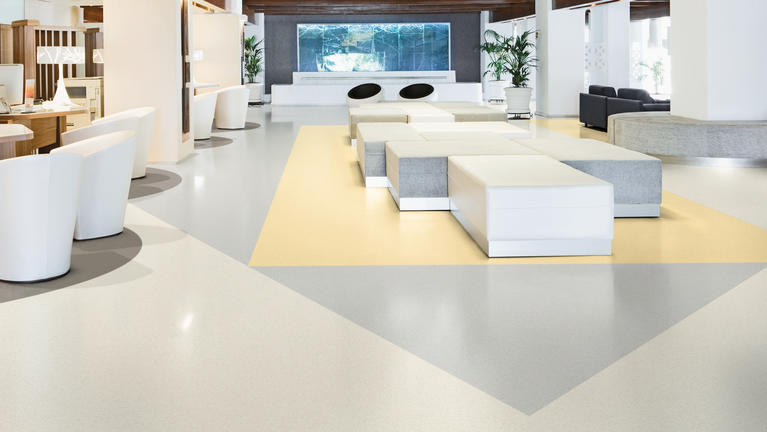
I. UV Coating Testing of PVC Flooring: Judging Surface Protection Ability
The UV coating acts as a "protective coat" for PVC flooring, which can significantly improve the surface wear resistance, stain resistance, and aging resistance. It is particularly crucial in commercial scenarios with high foot traffic. Through a simple sanding test, you can initially determine whether the flooring has undergone UV treatment.
Testing Tools
400-grit fine sandpaper (for daily sanding, avoid using overly coarse sandpaper to damage the flooring) and a clean soft cloth.
Operation Steps
Sampling: Choose an inconspicuous corner of the flooring (such as under a wardrobe or near the baseboard of a room) as the test area to avoid affecting the overall appearance.
Sanding: Hold the sandpaper with your fingers and sand back and forth 5-10 times in the test area with light force. Control the sanding range to approximately 2cm × 2cm. The force should be just enough to drive the sandpaper to slide, do not press hard.
Result Observation: After wiping off the sanding dust with a soft cloth, carefully observe the sanded area. If there are obvious white marks on the surface, forming a clear contrast with the surrounding unsanded area, it indicates that the flooring has probably undergone UV coating treatment; if there is no obvious color change after sanding, or only slight scratches appear, it may not have undergone UV treatment or the coating thickness is insufficient.
Supplementary Explanation
The wear resistance of the UV coating can also be auxiliary judged through the "key test": use the side of an ordinary key to scratch the flooring surface with the force used in daily life. If only slight marks are left and can be wiped off, it indicates that the coating has good protective performance; if obvious deep marks appear and cannot be removed, the coating quality is poor.
II. Formaldehyde Content Testing of PVC Flooring: Ensuring Indoor Air Safety
Although the main component of PVC flooring itself is polyvinyl chloride, which theoretically has extremely low formaldehyde emission, some low-quality products may use formaldehyde-containing adhesives or additives during the production process, posing a risk of excessive formaldehyde. The following three methods can be selected according to the actual scenario. Among them, the climate chamber method has the most accurate results and is suitable for formal testing; the perforation method and desiccator method are easier to operate and suitable for preliminary screening.
1. Perforation Method: Suitable for Testing Composite PVC Flooring (Including MDF/Particleboard Substrate)
This method conducts quantitative testing by extracting formaldehyde from the flooring substrate. The core principle is to dissolve formaldehyde with a solvent and then calculate the content through a titration reaction. It is especially suitable for composite PVC flooring containing MDF or particleboard substrates.
Testing Tools
Small electric drill (equipped with 3mm drill bit), balance (accuracy 0.01g), sealed glass bottle, toluene solvent, burette, phenol reagent (available in chemical reagent stores).
Operation Steps
Sampling: Use an electric drill to drill about 5g of sample on the flooring substrate (avoiding the surface PVC layer). Grind the sample into fine powder (the smaller the particles, the more sufficient the extraction), accurately weigh it with a balance, and put it into a sealed glass bottle.
Formaldehyde Extraction: Add 50ml of toluene solvent to the bottle, seal it, shake it for 1 minute, and let it stand for 24 hours to allow formaldehyde to fully dissolve into the solvent.
Titration Testing: Pour 10ml of the extract into a beaker, add 3 drops of phenol reagent, and slowly add standard sodium hydroxide solution to the beaker with a burette until the solution color changes from colorless to pink and does not fade for 30 seconds. Record the volume of sodium hydroxide solution consumed, and calculate the formaldehyde content according to the formula (for specific calculation formula, refer to the national standard GB/T 17657-2013).
2. Desiccator Method: Suitable for Testing PVC Flooring and Wood Composite Flooring
This method detects the formaldehyde emission of flooring by simulating the formaldehyde release process in a closed environment. It is relatively easy to operate and suitable for preliminary household testing.
Testing Tools
Desiccator with lid (24cm in diameter, common laboratory specification), petri dish, distilled water, balance, formaldehyde testing reagent (commercially available household formaldehyde testing kit is acceptable).
Operation Steps
Preparation: Wash and dry the desiccator. Add 20ml of distilled water to the bottom of the desiccator, and place a 10cm × 10cm PVC flooring sample (remove the surface packaging and keep it clean) on the desiccator partition.
Sealed Release: Tightly cover the desiccator and place it in a normal temperature environment of 25℃ for 24 hours to allow the formaldehyde released by the flooring to dissolve into the distilled water.
Testing: Take out the petri dish, pour 5ml of distilled water from the desiccator into it, add the formaldehyde testing reagent, let it stand for 10-15 minutes according to the instructions of the testing kit, and compare it with the color card to judge the formaldehyde content. If the color is lighter than the 0.1mg/L color card, it indicates that the formaldehyde emission meets the standard (complying with the requirement of indoor decorative materials formaldehyde emission ≤ 0.1mg/m³ in the national standard GB 18587-2017).
3. Climate Chamber Method: Accurate Testing, Suitable for Formal Acceptance
The climate chamber method simulates the real service environment (controlling temperature, humidity, and air circulation speed) to detect the formaldehyde emission of flooring within a specific time. The results are closest to the actual use situation. It is currently an internationally recognized accurate testing method, suitable for formal scenarios such as decoration acceptance (can be operated by entrusting a third-party testing agency).
Testing Standard: According to the national standard GB 18587-2017, the formaldehyde emission of indoor decorative materials should be ≤ 0.1mg/m³. If the test result is within this range, it is a qualified product.
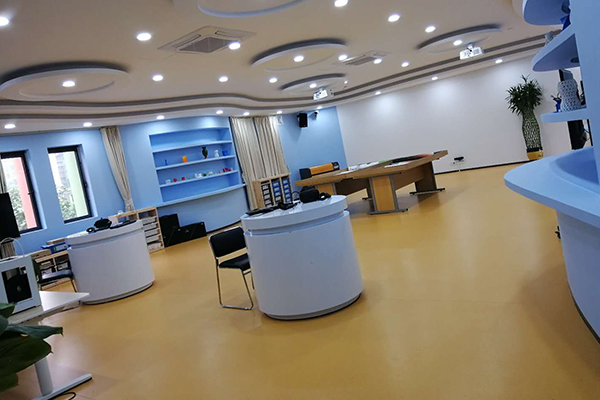
III. Acid and Alkali Resistance Testing of PVC Flooring: Evaluating Daily Stain Resistance
PVC flooring will inevitably come into contact with various liquids during use (such as kitchen oil stains, bathroom cleaning agents, disinfectants in medical scenarios, etc.). Acid and alkali resistance directly determines the stain resistance and service life of the flooring. By simulating the corrosive liquids encountered in daily life, its acid and alkali resistance can be quickly judged.
Testing Tools
Medical alcohol (75% concentration), ordinary machine oil (such as lubricating oil), dilute hydrochloric acid (10% concentration, available in chemical reagent stores, or replaceable with toilet cleaner), dropper, plastic wrap, clean soft cloth.
Operation Steps
Sampling: Select 3 adjacent test points on the flooring, mark them as A, B, and C respectively. The distance between each test point is more than 5cm to avoid mutual interference between liquids.
Liquid Dropping: Use a dropper to drop 2 drops of alcohol on point A, 2 drops of machine oil on point B, and 1 drop of dilute hydrochloric acid on point C (dilute hydrochloric acid is highly corrosive, avoid dripping on skin and clothes). Control the liquid range of each test point within 1cm in diameter.
Simulated Soaking: Cover the 3 test points with plastic wrap respectively, press gently to make the plastic wrap fit the flooring to prevent liquid volatilization, and place it in a normal temperature environment of 25℃ for 24 hours.
Result Observation: Uncover the plastic wrap, absorb the residual liquid with a soft cloth, and observe the surface state of the 3 test points. If obvious discoloration, bulging, cracking, or loss of luster occurs, it indicates that the flooring has poor acid and alkali resistance; if there is no obvious change on the surface and it can return to its original state only by simple wiping, the acid and alkali resistance is good.
IV. Antibacterial Performance Testing of PVC Flooring: Safeguarding a Healthy Usage Environment
In humid or bacteria-prone scenarios such as hospitals, kindergartens, and kitchens, the antibacterial performance of PVC flooring is particularly important. High-quality antibacterial PVC flooring can inhibit the growth of bacteria and mold by adding antibacterial agents, while ordinary flooring can easily become a breeding ground for bacteria. By simulating the mold growth in a humid environment, the antibacterial ability of the flooring can be intuitively judged.
Testing Tools
Fresh bread slices (choose mold-prone whole wheat bread or ordinary white bread), spray bottle (filled with pure water), sealed plastic box, black plastic bag.
Operation Steps
Sample Preparation: Take a 2cm × 2cm bread slice, and spray the bread slice with a spray bottle until it is slightly damp (it feels moist but not dripping when touched by hand; a humid environment is a necessary condition for mold growth).
Sample Placement: Place the damp bread slice flat on the PVC flooring, cover the bread slice and the underlying flooring with a sealed plastic box (ensure a closed space is formed inside the plastic box), then wrap the plastic box tightly with a black plastic bag, and place it in a warm environment of 25-30℃ (such as inside a kitchen cabinet or near a heater), avoiding direct sunlight.
Result Observation: After 2 days, open the black plastic bag and the plastic box, and observe the mold growth on the bread slice and the underlying flooring surface. If obvious green and black mold spots appear on the bread slice, and mold also adheres to the flooring surface, it indicates that the flooring has weak antibacterial performance or has not undergone antibacterial treatment; if the bread slice only becomes slightly soft without obvious mold growth, and the flooring surface is clean and tidy, the antibacterial performance is good.
Supplementary Explanation
To ensure the accuracy of the test, a comparative test can be carried out on ordinary ceramic tiles or wood flooring at the same time. If the mold growth on the bread slice on the PVC flooring is significantly better than that on the comparative flooring, it indicates that its antibacterial effect is remarkable.
V. Summary: Testing Notes and Result Judgment
Safety First: When using chemical reagents such as dilute hydrochloric acid and toluene, wear gloves to avoid direct contact with the skin, mouth, and nose. Wash hands in time after operation; follow safety regulations when using tools such as electric drills.
Choose the Right Test Area: All tests should be carried out in inconspicuous corners of the flooring to avoid irreversible damage to the flooring appearance.
Judge with Reference to National Standards: The formaldehyde test results should refer to the national standard GB 18587-2017 (≤ 0.1mg/m³), and the antibacterial performance can refer to GB/T 35265-2017 (antibacterial rate ≥ 90% is qualified). If a formal report is needed, it is recommended to entrust a third-party testing agency with CMA qualification.
Through the above methods, the core properties of PVC flooring can be quickly and preliminarily judged. When purchasing, it is recommended to give priority to products with brand guarantee and test reports, and verify them in combination with the testing methods in this article to ensure that you buy safe and durable PVC flooring.

 English
 العربية
 Français
 Русский
 Español
 Português
 Deutsch
 italiano
 日本語
日本語 한국어
한국어 Nederlands
 Tiếng Việt
 ไทย
ไทย Polski
 Türkçe
 አማርኛ
አማርኛ Bahasa Melayu
 தமிழ்
தமிழ் Filipino
 Bahasa Indonesia
 magyar
 Română
 Монгол
 қазақ
қазақ Српски
 हिन्दी
 فارسی
فارسی Kiswahili
 Slovenčina
 Slovenščina
 Svenska
 українська
 Ελληνικά
 Suomi
Suomi Հայերեն
 עברית
עברית اردو
اردو Shqip
Shqip বাংলা
বাংলা Hrvatski
 Afrikaans
 Māori
Māori සිංහල
සිංහල Oʻzbekcha
 latviešu
 Беларуская мова
 Bosanski
 Български
 ქართული
 Lietuvių
 Malti
Malti


